

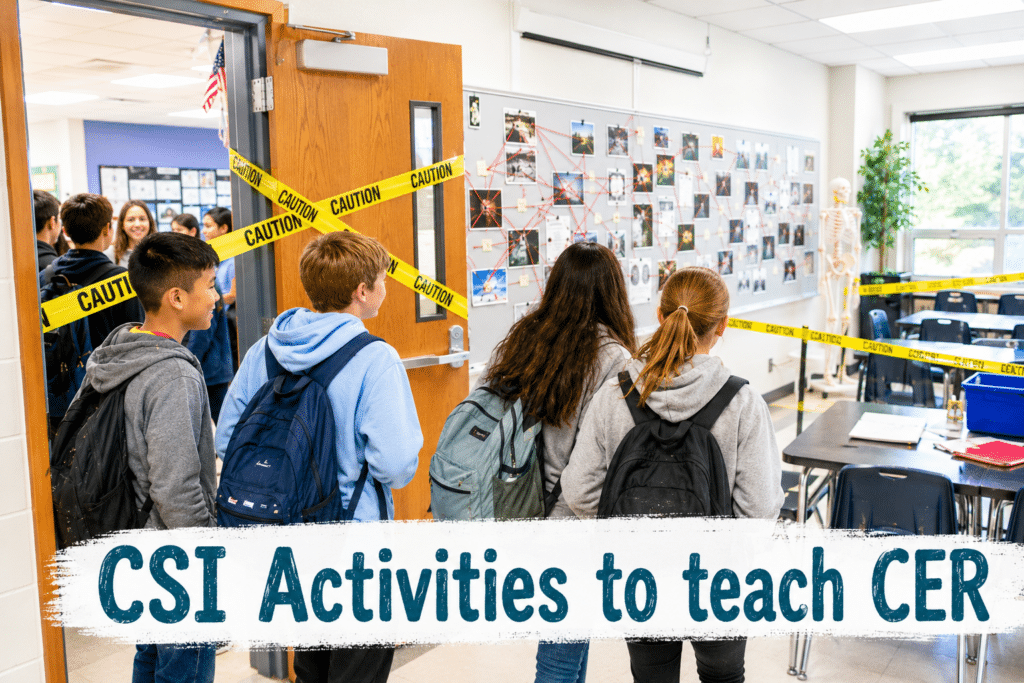
Picture the first week of school. Instead of a syllabus and a seating chart, your students walk into a crime scene. There’s a case to solve, evidence taped to the board, and a room full of kids who suddenly forgot they were nervous about the first day. They’re arguing about who did it, digging through the clues, and building a case, and they have no idea that what they’re really learning is claim, evidence, and reasoning.
That’s the whole idea. Hook first, vocabulary later. Claim, evidence, reasoning is hard for a lot of students when you teach it as a writing structure on a worksheet. But when it’s the tool they need to solve a mystery, they pick it up without the groaning. A crime scene investigation is one of the best ways to start your full year of scientific argument.
Why week one is the right time for CER
It’s tempting to save CER for later, after the “real” content starts. I’d argue the opposite. Claim, evidence, and reasoning aren’t one unit’s skill. It’s the thinking that runs through everything you teach all year. Every lab, every data set, every reading comes back to “what do you think, what’s your evidence, and why does that evidence support it?”
So if you teach the structure in week one, you’re not spending a week on something disposable. You’re installing the framework you’ll use every single time after. When you hit your first real lab in September and say “okay, make your claim,” they already know what you mean because they used it to solve the case in August.
How the CSI mystery works
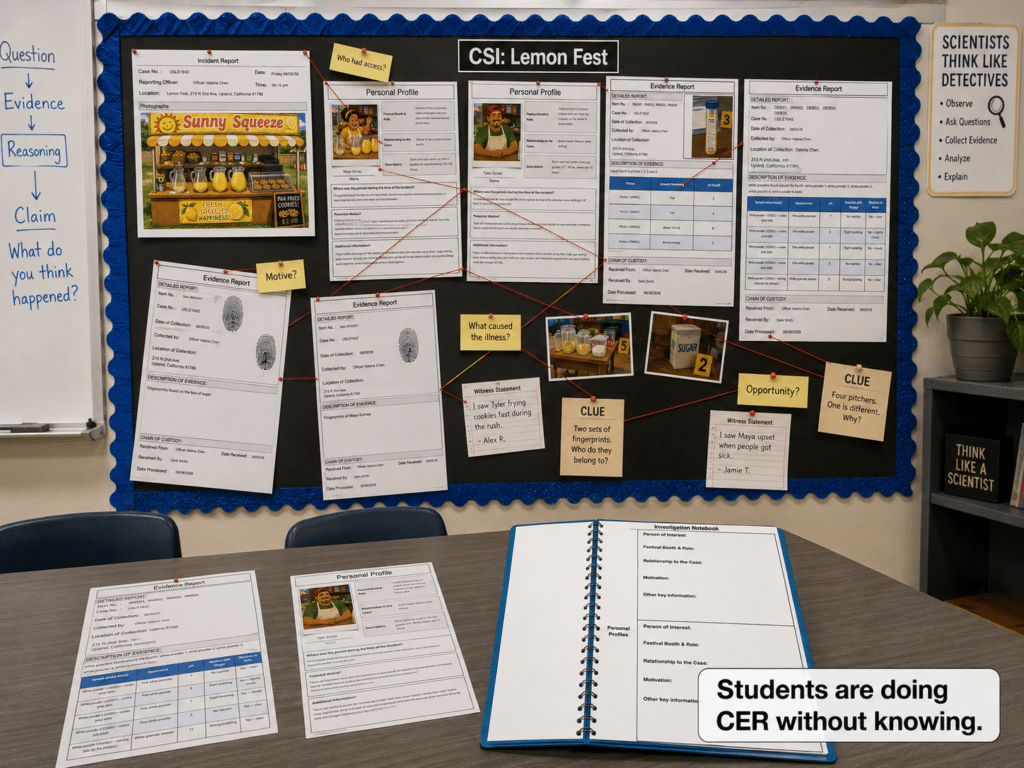
A CSI mystery is perfect for CER. Here’s how I do it in my class:
- Set the scene. I use my school’s caution tape outside your classroom to get students excited. I also play CIS music. Then I present the mystery. I hand students their investigation notebooks, let them know what happened, and give them the evidence. This might be witness statements, physical clues, data tables, or simple lab results, depending on which investigation I am doing.
- Make a claim. After they go through all the evidence, they discuss in groups as to what happened. They then present what happened in one sentence to the class; this is their claim.
- Back it with evidence. From there, we might have a discussion where students go through the clues and pull the specific pieces that support their claim. They have discussions as to which evidence should be used and if the evidence really does support the claim enough to be held up in a court of law; that’s the important part.
- Explain the reasoning. This is the part that is hardest for students, so the mystery is perfect for it. They have to connect each piece of evidence to their claim and explain why that evidence supports the claim and what really happened.
By the end, every student had a full claim-evidence-reasoning argument, and they did it because they wanted to solve the case. To see how I set it up check out my video:
Where it goes from here
This doesn’t have to end with your first-week. You can circle back to it as students move on to doing CER’s with labs and other activities. You can bring back how they had to use evidence to support their claim of what happened. How they had to explain the evidence to show why it was important in supporting the claim.
Then as a fun review and refresher, around October you can run a spookier forensic version to bring them back to what is claim, evidence, reasoning. In fact, I like to do one every quarter as a fun way to practice, especially when its been a long time between breaks and the students are starting to get crazy.
So, if you want students arguing from evidence on day one, hand them a mystery. They’ll be so busy solving it they won’t notice they’re learning the most important thinking skill of the year. And you’ll have planted the CER flag early, so every unit after gets a little easier.
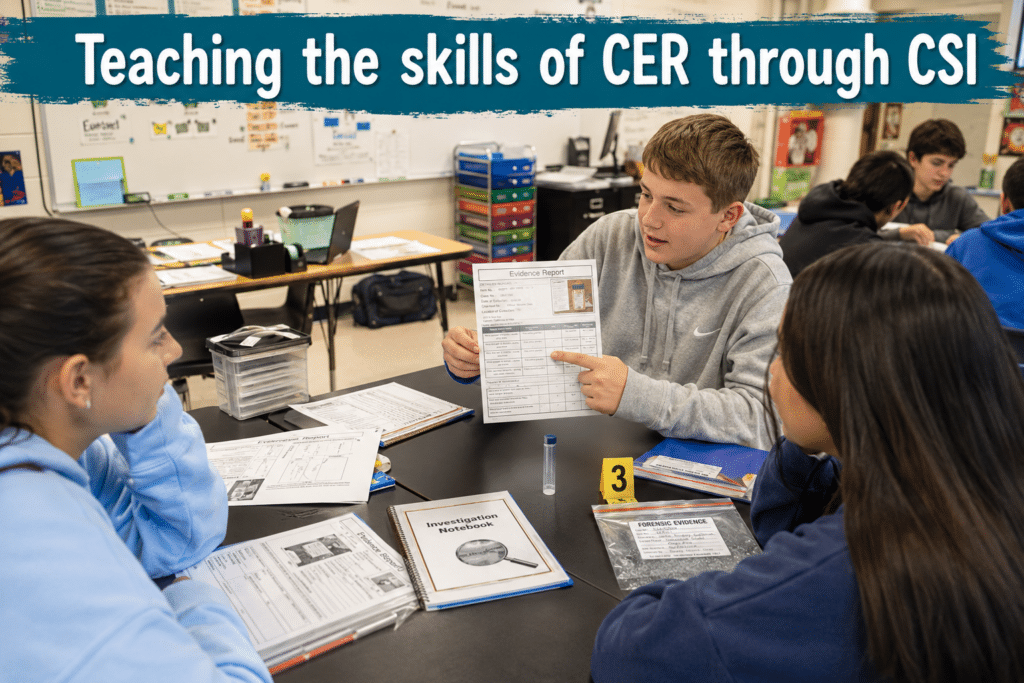
If you’d rather not build the whole case from scratch, you can check out my different CSI mystery investigations and choose the ones best for your class.