
Why AI literacy matters for our students, and a few simple ways we can start teaching it.
More than half of our students are already using AI. A recent Pew Research Center survey found that more than half of teens say they have used an AI chatbot to help with their schoolwork, and that number has been climbing fast. Rather than asking whether students should use AI, we should ask how we can teach them to use it as a tool for learning rather than a shortcut to answers.
Here is the part that matters. The things a lot of us are worried about, students cheating and students losing the ability to think for themselves, become more likely, not less, when we leave students to figure AI out on their own. If no one teaches them how to use it appropriately, they will use it the only way they know how. That’s where AI literacy comes in.
What AI literacy for students actually is
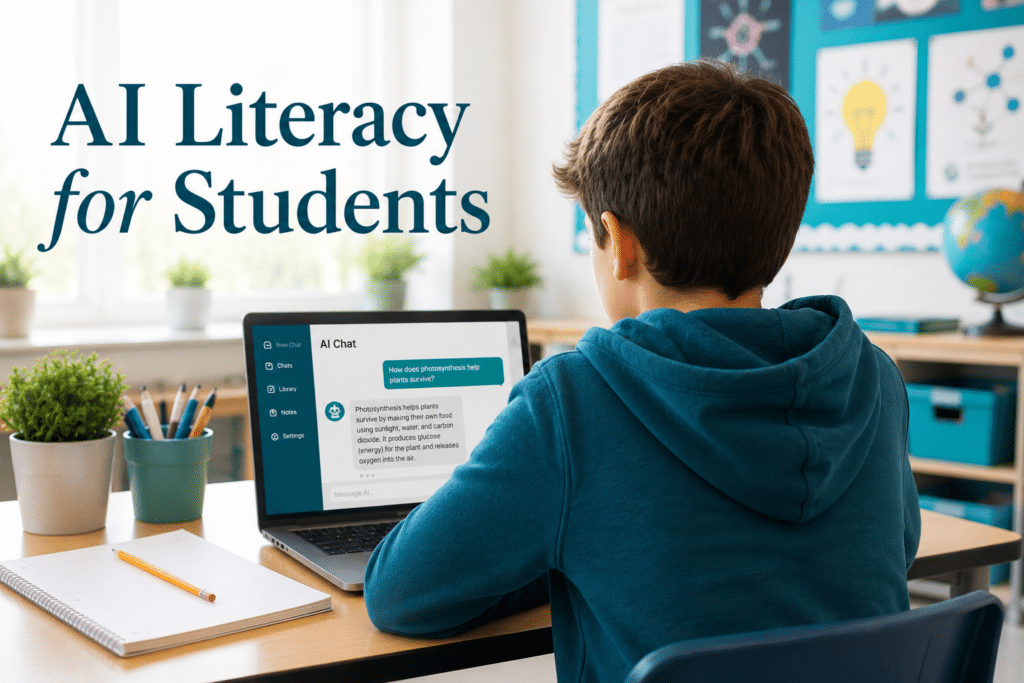
AI literacy is simply teaching students how to use AI thoughtfully. It’s more than knowing what words like algorithm or machine learning mean. It’s knowing how to use these tools, when to question them, and how to recognize when they’re wrong.
One idea sits at the center of it all. AI doesn’t hand you the truth. It hands you back patterns from the data it was trained on. As the American Psychological Association puts it, AI reflects data, not truth, and if that data is biased, the answers will be too. A student who understands reads an AI answer very differently from one who doesn’t.
Why it matters for our students
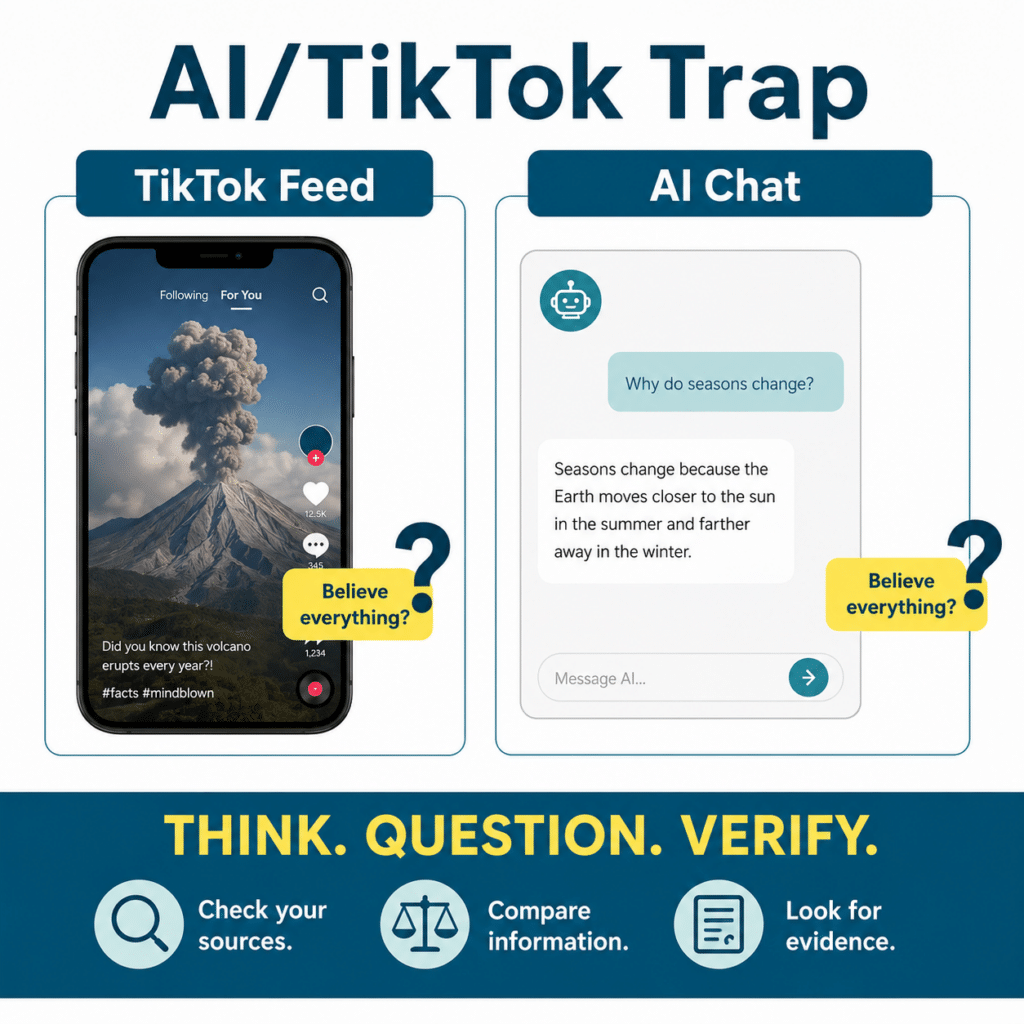
When students aren’t taught how to use AI, they tend to fall into what I call the AI/TikTok trap. They believe everything AI tells them, just like they believe everything they see on TikTok. Even though they know misinformation exists, many struggle to recognize it or know how to verify what they’re reading. That’s especially concerning in a science classroom, where evaluating evidence and reasoning is the foundation of what we teach.
That’s why critical thinking matters more than ever. The same skills we already teach in science, questioning sources, checking data, and asking whether a claim is supported by evidence, are the exact skills students need when using AI. The APA identifies critical thinking as one of the most important skills students need to recognize bias, evaluate evidence, and identify misinformation. And the stakes are real. The more often someone sees a false claim, the more believable it becomes, and AI can generate those claims faster and more convincingly than ever before.
When we teach students to question AI rather than trust it blindly, we’re doing more than managing a tool. We’re helping them become people who use AI on purpose, not students who get used by it. That’s a skill they’ll carry into every class and every job that comes after ours.
How we can help students build ai literacy
The good news is you don’t need to be an AI expert to teach this, and you don’t need a brand-new unit. Most of it fits right into what you already do. Here are a few simple ways to start.
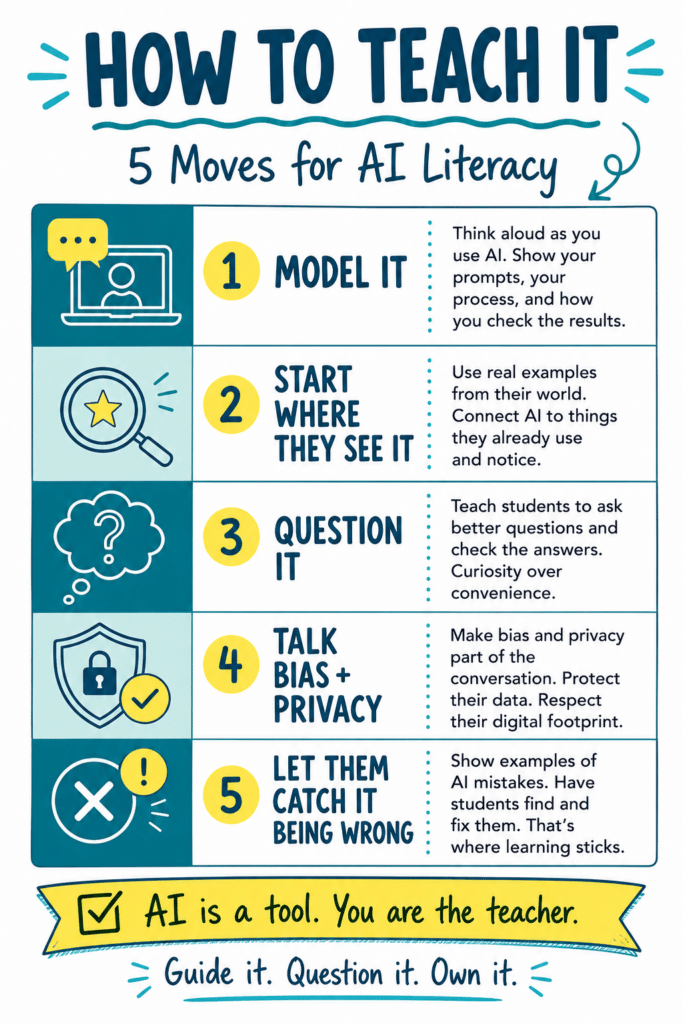
- Model it. Show students how you use AI and, just as important, how you check it. When they see you fact-check an AI answer, they learn that’s what they’re supposed to do too.
- Start with where they already see it. Point out the AI they use every day, autocorrect, video recommendations, chatbots, so the idea feels familiar instead of abstract.
- Teach them to question it. Have them ask AI where its information came from, or how it reached an answer, and then check it against a real source.
- Talk about bias and privacy. Where does AI get its information, and what happens to whatever they type into it. These work best as conversations, not lectures.
- Let them catch it being wrong. Nothing teaches “this isn’t always right” better than watching AI confidently give a wrong answer and catching it themselves.
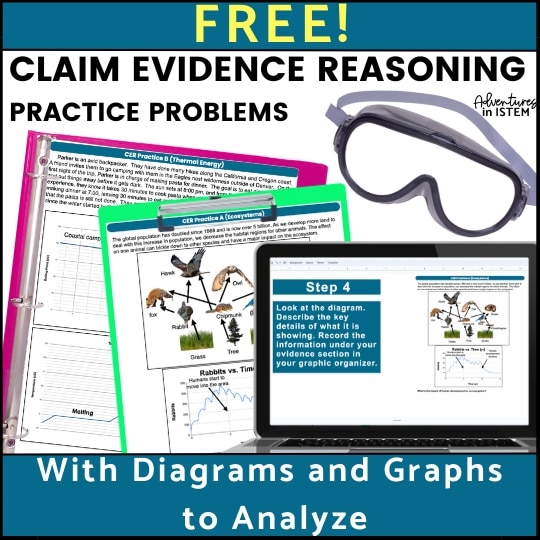
I actually started doing a version of this with my CER feedback. When my students use an AI tool to get feedback on their claim, evidence, and reasoning, I teach them that the tool is not always right. They read the feedback, decide whether they agree with it, and if they don’t, they ask the AI how it came to that conclusion. The AI gives them feedback, but they’re the ones doing the thinking and the revising. That back-and-forth, questioning the tool instead of just accepting it, is AI literacy in action.
Raising students who can think with AI
AI isn’t going anywhere, and our students are going to grow up using it whether we teach them or not. We get to decide whether they use it as a crutch or as a tool they know how to question. When we teach AI literacy, we’re not just keeping students from cheating. We’re raising thinkers who can work alongside this technology and stay in charge of their own learning.
If you want to see what this looks like in practice, check out my post on using AI for CER feedback, where I walk through the student feedback routine I mentioned above.
Looking for more ways to use help students with AI literacy? check out